
November 29, 2025
Where’s IBCORA Dr. Waldo? By Frederick W. Barker MD FACS
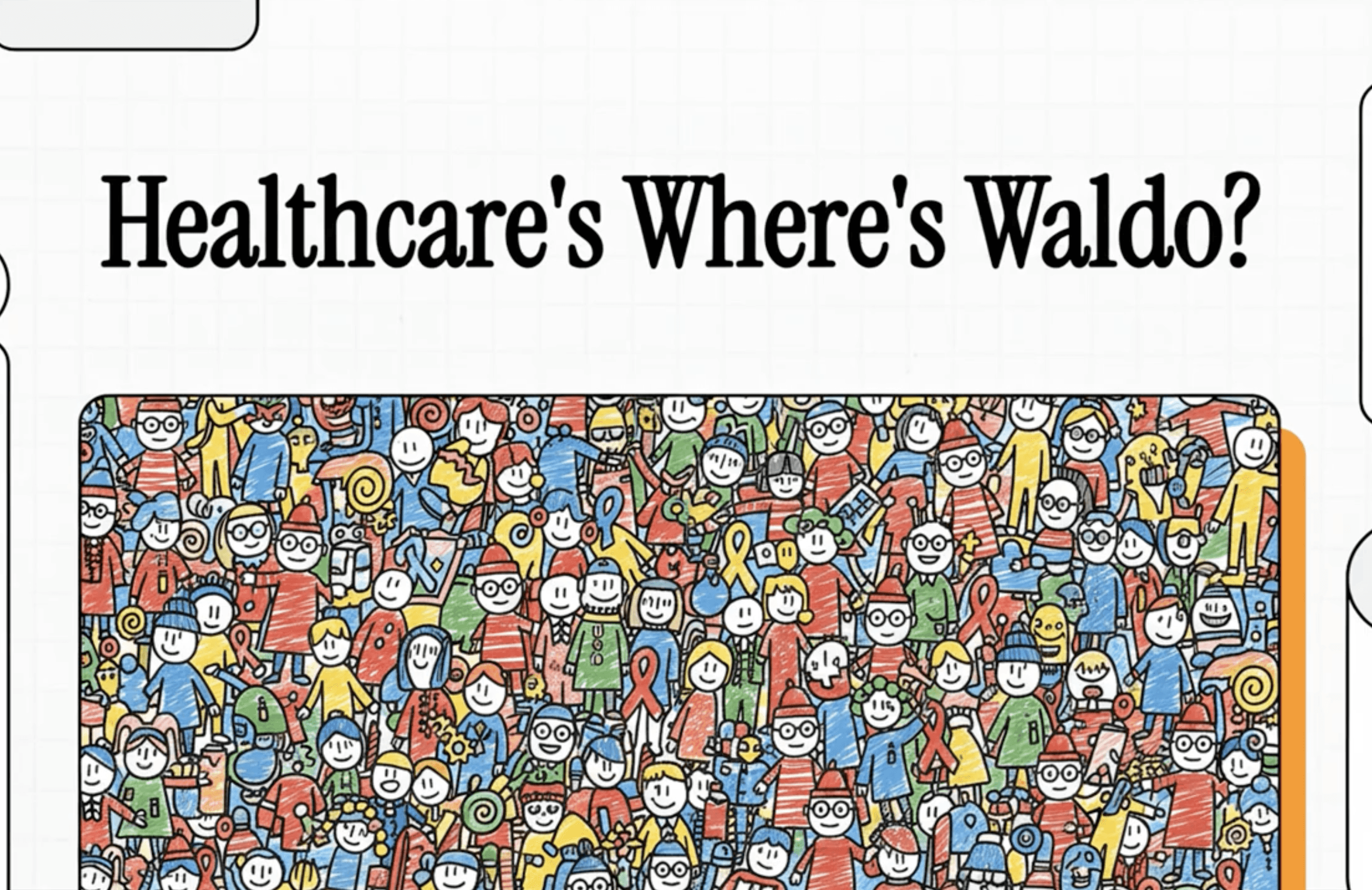
ABSTRACT: Greetings, I’m Dr. Frederick Barker, a general surgeon with a special interest in breast cancer and an office in Bluefield, Virginia. I wrote “Where’s IBCORA Dr. Waldo” in response to the conversations that followed a story that aired October 7, 2025, on NBC News Now. The story was entitled, “US women are being shut out of a breast cancer treatment valued around the world. The technique known as IORT, has numerous benefits, surgeons say, but it generates less money for hospitals and radiation oncologists.” The story was written by Gretchen Morgenson, Senior Financial Reporter, NBC News Investigations. Her story generated a lot of conversation among members of the medical community. Ms. Morgenson’s story speaks for itself and can be viewed by clicking HERE. I decided to write “Where’s IBCORA Dr. Waldo” in response to the conversation her story generated. IBCORA stands for Improving Breast Cancer Outcomes in Rural Appalachia, and Ms. Morgenson’s story reminded me of “Where’s Waldo” the puzzle book where the objective is to find Waldo, his friends and a few of their things, hidden in plain view, within a crowded field of distracting images of people and things. Effectively, missing the forest for the trees.
THE ARGUMENT
Ms. Morgenson’s Story identifies an obvious difference of opinion between ASTRO, The American Society of Radiation Oncology, and several surgeons with experience using IORT. The surgeons site multiple benefits, including lower cost, convenience and patient satisfaction. They point out that IORT is a particularly good option in rural areas. In contrast, ASTRO’s newest guidelines discourage the use of IORT outside the context of multi-institutional registries or prospective clinical trials. They site a higher local recurrence rate compared to whole breast radiation.
From my perspective, as a surgeon whose special interest in rural breast care delivery began in1992, Ms. Morgenson’s story was most important for what it revealed about the American healthcare system, hidden in plain view. As important a tool as IORT is for treating some breast cancer patients, for the most part, it does not improve survival. To accomplish improved survival, we need the means and methods for earlier detection and better systemic therapy. My article suggests practical ways we can improve breast cancer outcomes in our service area and this could be used as a model for improving other healthcare outcomes here and throughout rural America.
On 10/7/2025 NBC News Now ran a story by Gretchen Morgenson, moderated by Hallie Jackson. The story was entitled “US women are increasingly being shut out of a breast cancer treatment valued around the world. The technique known as IORT, has numerous benefits, surgeons say, but it generates less money for hospitals and radiation oncologists.” While the story has national importance, it has particular significance for those of us who live in rural America. Ms. Morgenson’s article starts by pointing out, “It’s not uncommon for breast cancer patients in the rural South to travel hundreds of miles to reach the medical practice run by Dr. Phillip Ley, a cancer surgeon in Jackson, Mississippi….For those who are good candidates, Ley recommends a therapy that delivers a single targeted dose of radiation to a patient’s breast tissue immediately after surgery to remove a tumor. Known as intraoperative radiation therapy, or IORT, it costs patients less in both time and money than traditional radiation treatments and is far less grueling.” Dr. Ley said, “For our patient population here, [IORT] has been such a boon because we have so many rural patients…I have patients that don’t have enough gas money to go to radiation every day.”
As a general surgeon who came from the USAF to Bluefield in 1989 and began focusing on providing Comprehensive Breast Care in 1992, I agree with Dr. Ley. At 78, I have learned that my purpose in life as a surgeon is to serve the underprivileged and the dispossessed. For me that means serving my neighbors in rural Appalachia and leaving my neighborhood a little better than when I came to town, when I choose to retire from clinical practice. I used IORT when Bluefield Regional Medical Center was a hospital, before it became a university dormitory. Unfortunately, we no longer have IORT equipment locally, and WVU has decided not to offer IORT to treat early-stage breast cancer, although it has the equipment and uses it to treat brain tumors. I recently sent two patients who were appropriate candidates, and wanted IORT, the 690 miles to have Dr. Ley perform it. Both were pleased. As you can imagine, many patients around here, who may be candidates for IORT, can’t afford to travel that far to get it.
https://www.nbcnews.com/news/us-news/us-women-are-increasingly-shut-breast-cancer-treatment-valued-world-rcna229395
In this video, Dr. Catheryn Yashar, health policy chair and president elect of ASTRO, the American Society for Radiation Oncology, pointed out that patients who elected to have IORT may have a higher risk of having a local recurrence of their breast cancer than women who have traditional whole breast irradiation. Local recurrence of breast cancer after IORT should not be considered to be the boogey man. Its consequences must be viewed within the context of each patient’s experience and priorities. Breast cancer treatment decision-making nowadays is a complicated process and should be individualized to meet the needs and priorities of each patient. Therefore, while Dr. Yashar’s statement is technically correct, it is also misleading. I will explain.
For those interested in getting a better understanding about the history and evolution of breast cancer treatment, look here:
https://pmc.ncbi.nlm.nih.gov/articles/PMC9222657/
Briefly recapping the article, the advent of “modern breast surgery” is generally credited to Dr. William Halsted and his radical mastectomy. That operation was not predicated on the science of breast cancer as we understand it today. It was a one-size -fits-all operation and was very disfiguring, which included complete removal of the breast, chest wall muscles and armpit lymph nodes. Nevertheless, it became the “gold standard” for breast cancer surgery for about 50 years, starting in the mid-19th century. Since the mid-twentieth century, progressively less aggressive surgery has become standard practice. Breast conserving surgery, often referred to as “lumpectomy”, is usually accompanied by radiation therapy. It has become a preferred approach. Selective sampling of armpit lymph nodes, called sentinel lymph node biopsy, can usually be performed. This technique reduces the chances of developing postoperative pain and arm swelling, called lymphedema. These newer techniques generally deescalate treatment and radiation may be avoided altogether in properly selected, older women. Similarly, systemic therapies, in the form of hormone manipulation, a variety of chemotherapy regimens and more recently targeted biologic therapy are also evolving.
Throughout all this treatment evolution there has been one constant objective – earlier diagnosis, aimed at treating earlier-stage breast cancer. The consequence of this strategy has been general improvements in outcomes. In our world of political polarization and vitriol against those with whose opinions we do not share, Ms. Morgensen’s story is important for what it reveals about the current state of American healthcare and for what remains hidden from the public. The story is important for how it was prepared and presented, and for the responses it stimulated. The story is important for the opportunities for dialogue about those responses which it stimulated, which might create an environment for improving healthcare in rural America. Here are some examples of the conversation Ms. Morgensen’s story stimulated.
Dr. K.M. MD PhD, a SC radiation oncologist’s response to NBC News Now.
My response to Dr. M.
Dr. M’s response to me.
My response to Dr. M’s response to me.
Dr. Lally MD, president of ACRO’s response to NBC News Now.
My response to Dr. Lally MD
Dr. Holmes MD FACS response to ASTRO.
Professor Vaidya MBBS MS DNB FRCD PhD’s response to ASTRO
Dr. Police MD FACS’s response ASTRO and ASBrS:
For me, Ms. Morgenson’s story was a “Where’s Waldo” moment. You probably know that Where’s Waldo, by Martin Hanford, is a puzzle book where the objective is to find Waldo, his friends and some of their things, amid a crowded field of distractions and near look-alikes.
https://www.penguinrandomhouse.com/series/WAL/wheres-waldo/
Although on the surface Ms. Morgenson’s story was about women being denied a single valuable treatment tool to improve breast cancer outcomes, particularly when it comes to rural America, the story’s importance goes far beyond that. Hypothetically, if Waldo holds the -keys for improving breast cancer outcomes in rural America, then finding Waldo is the goal and determining which keys will improve breast cancer outcomes the most is even more important. All health care providers should be able to agree that improving overall survival, disease-free survival and Quality-Adjusted Life Years (QALY) are the most important outcome improvement metrics. And, as important as IORT is, it contributes relatively little in this regard. To achieve the kinds of improvements we really need requires earlier detection and better targeted systemic therapies. We also must be willing to acknowledge that currently, certain governmentally accepted guidelines for breast cancer screening, which have been adopted as the “gold standard”by some organizations, will result in many avoidable deaths, particularly among younger women and disproportionately among African American women. To be clear, money is and should be an important factor for determining what screening tests should be considered “cost-effective, and how often they should be performed. Much as money plays a role in what equipment a hospital chooses to acquire. But that calculation is complicated, and its implications are profound. It must be done with an understanding of science and statistics.
https://pubmed.ncbi.nlm.nih.gov/20362940/
https://www.sciencedirect.com/science/article/pii/S1098301518332376
An undeniable fact is that in the US we spent almost twice the percentage of our GDP on healthcare as other developed nations do, only to rank near the bottom of the pack on important quality metrics, such as life expectancy, infant and maternal mortality and preventable deaths. These metrics for rural Appalachia are among the worst in the US and in the counties where our patients reside, those metrics and others are among the worst of the worst. We can do better. We must do better! Here’s how: To start we must acknowledge that changing the status quo is hard work to accomplish. Perseverance and science-based data collection and analysis are required.
https://www.sciencedirect.com/science/article/pii/S2468266725001732
https://cancerhistoryproject.com/people/bernard-fisher-pioneering-breast-cancer-researcher-dies-at-101/
Although development and implementation of Clinical Guidelines can be constructive, they are only as good as the leaders of the organization(s) that publish them, and the information used to formulate those guidelines.
https://www.sciencedirect.com/science/article/abs/pii/S0020138322000778
To make matters worse, occasionally deviation from published guidelines may be used by clinical oversight committees as a mechanism to discipline practitioners despite those practitioners having engaged in informed, shared-decision-making (ISDM) with their patients. ISCM is a process that is clearly advocated by most responsible clinical guidelines. When this kind of malignant groupthink occurs, it is called “sham peer review”. Unfortunately, many forms of sham peer review exist throughout our healthcare system. The consequence of this professional misbehavior is profoundly detrimental to all of us.
https://pubmed.ncbi.nlm.nih.gov/21257850/ ; https://www.sciencedirect.com/science/article/abs/pii/S0020138322000778
I believe it is possible to organize a project that will be cost-effective and able to demonstrate significant outcome improvements within a year of implementation. Such a project might be called, IBCORA, “Improving Breast Cancer Outcomes in Rural Appalachia”. It will involve attempting to have women 25-80 answer a few simple questions regarding their personal and family history, to determine who among them are candidates for genetic counseling and genetic testing.
www.myriad.com , www.invitae.com
https://pmc.ncbi.nlm.nih.gov/articles/PMC11843151/
Women with a lifetime risk of being diagnosed with breast cancer >20% (high risk) will be offered an enhanced screening protocol that will include younger initiation of screening and periodic breast MRI, automated breast ultrasound and possibly contrast enhanced tomosynthesis. High risk patients will also be referred for consideration of pharmacologic breast cancer risk reduction. Women of average risk will be screened at a demonstrably beneficial interval with tomosynthesis (3D mammography), and MammoScreen, www.mammoscreen.com , an AI-interpretation supplementation will be performed at no additional cost to patients or third-party payers. Volunteer patient navigators will be trained to improve communication between patients and their breast cancer treatment team, www.xpeditemd.com. Virtual multi-disciplinary breast cancer conferencing will be made available. Reliable patient education will be made easily accessable. www.nccn.org , www.asbrs.org , www.astro.org, www.sbi-online.org , www.asco.org , www.wvumedicine.org . www.targetbreastcancer.org
An effort will be made to secure tomo-biopsy capability and IORT, locally. A pilot project with my own practice is currently underway, and we hope to engage Federally Qualified Health Clinics (FQHCs), with offices within 1.5-hour drive from Princeton Community Hospital/ WVU Medicine. We will work collaboratively with Appalachian Medical Professionals, www.wvvaanp.org and Ridin’ 4 a Cure, www.ridin’4acure.org , two area 501(c) 3s, to apply for grants and other sources of charitable funding. Area institutions of higher learning will be encouraged to participate, training their students to acquire skillsets needed locally and encouraging them to stay local after graduation. IBCORA is just one model for a single disease entity, but its principles can be applied for improving outcomes from a many common diseases and health problems in rural Appalachia and elsewhere.
NEWSLETTER
Stay Informed, Stay Healthy
Get the latest health tips, expert advice, and updates
delivered straight to your inbox.